ambal said:This text sums it up well:
The maximum power occurs when the force pushing on the pedals multiplied by the speed of the pedals is greatest.
For example, if the cyclist applies a force of 150 newtons to the pedals (150N is the force needed to lift a 15kg mass) and the speed of the pedals in a circle is 2 metres per second (2m/s), the pedalling power output of the cyclist is:
Pedalling power = force on pedals x speed of pedals
= 150N x 2m/s
= 300W
This is the same power as lifting a 30kg mass upwards a height of 1 metre every second.
That's a good illustration. I use 175mm crank arms, so 2 m/sec pedal speed translates to 109 rpm, a decent high-power cadence. The actual conversion factor from kg-force to newtons is 9.8, your illustration uses 10 which makes for ease of calculation. Newtons are handy because they translate directly to power.....just multiply newtons by velocity (meters/second) and you've got watts.
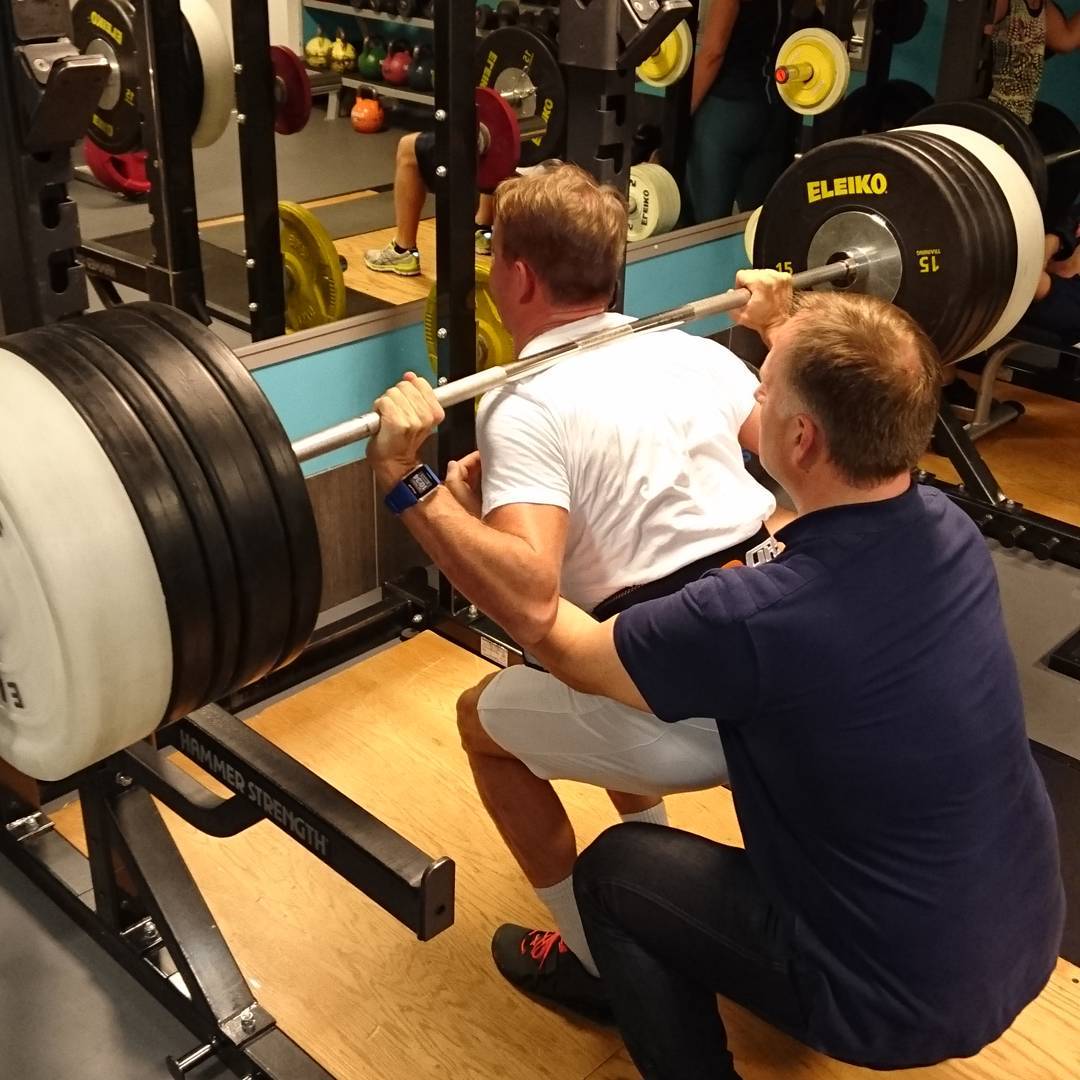
What all this implies of course is that we need to train to produce decent force at high velocity and high repetitions to achieve useful power output (and speed) on the bike. Being able to do a 400 lb squat for a few reps just doesn't translate into being able to sprint at 35 mph on a bike....for all kinds of reasons.